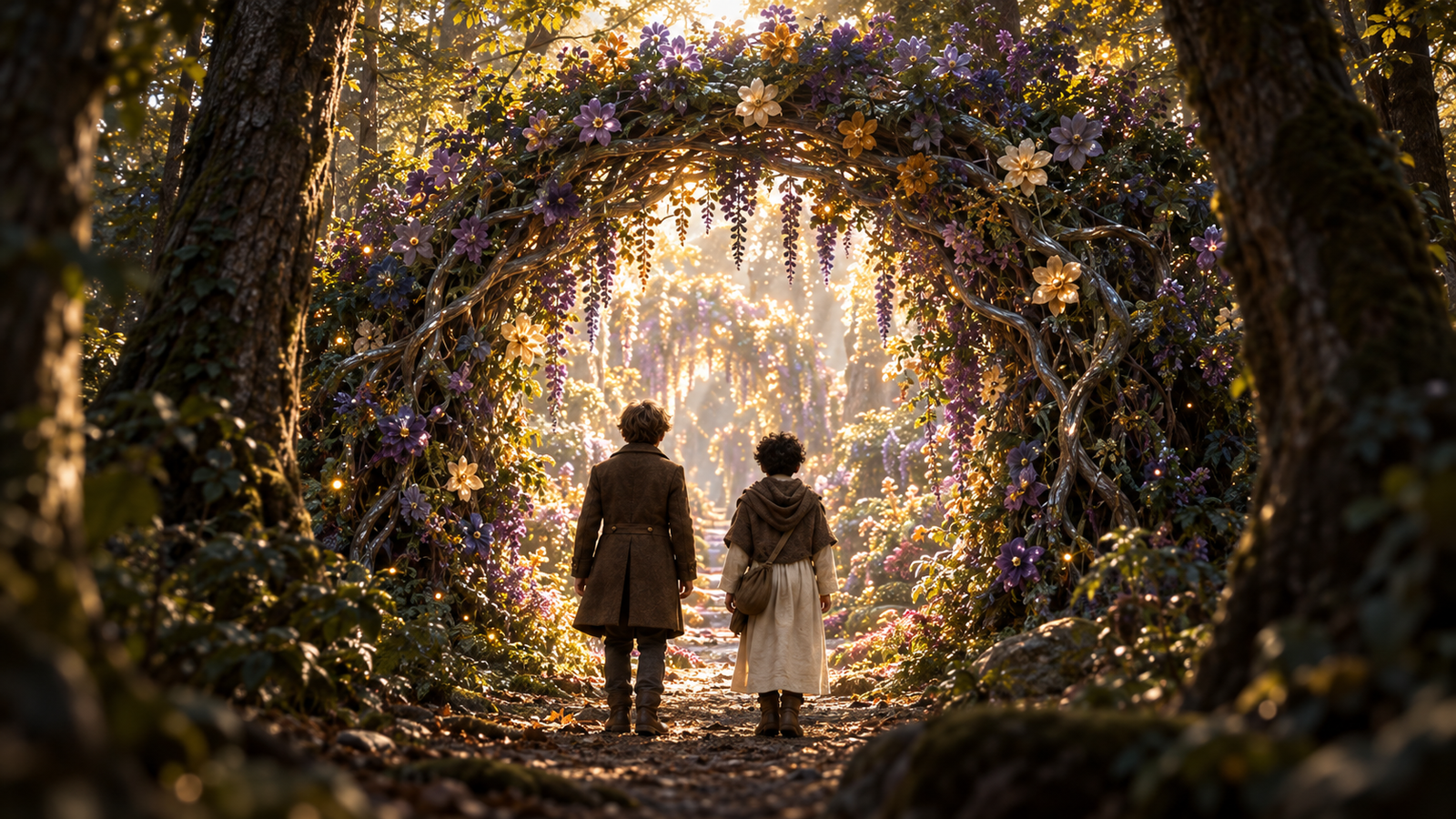
Ferdous is imagined. The people, places, and histories at the edge of Justin and Waleed’s adventure are not.
Explore the histories behind the nineteenth-century setting. Archival images are dated below; some show later moments in these continuing histories.
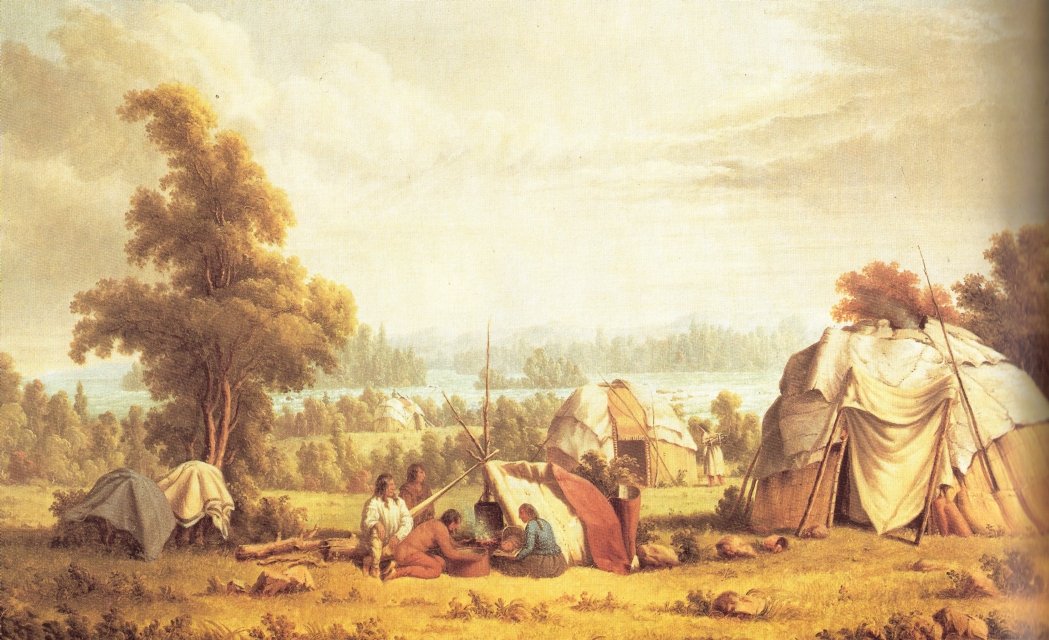
Paul Kane’s depiction of an Ojibwe village at Sault Ste. Marie in 1846. A painter’s interpretation, not a photograph.Paul Kane · Public domain ↗
01 / ANISHINAABEG
History is not a backdrop.
Lands, alliances, and promises that carried responsibilities on both sides. Anishinaabeg relationships with the Great Lakes reach far beyond the years of this story—and continue today.
Read more about Anishinaabeg
The Anishinaabeg—including Ojibwe, Odawa, and other related peoples—are distinct nations with deep and continuing relationships to the lands and waters of the Great Lakes region.
In the era surrounding the War of 1812, many First Nations allied with Britain. Their support was vital to the defence of British North America, but it did not create a relationship of subjects to a ruler. Treaty relationships carried responsibilities on both sides.
In the decades after the war, settlement pressure increased across Upper Canada. Treaties and land-surrender agreements were shaped by unequal power and often understood very differently by the Crown and First Nations. For many communities, this brought displacement, reduced land bases, and intensifying pressure to assimilate.
These histories are not finished. Anishinaabeg nations, languages, laws, and communities endure—and remain essential to understanding the places now called Ontario.
A note on language: “Ojibwe” and “Chippewa” appear in historical records and are used by some communities; “Anishinaabeg” is a broad collective term. No one term replaces the names that individual nations use for themselves.
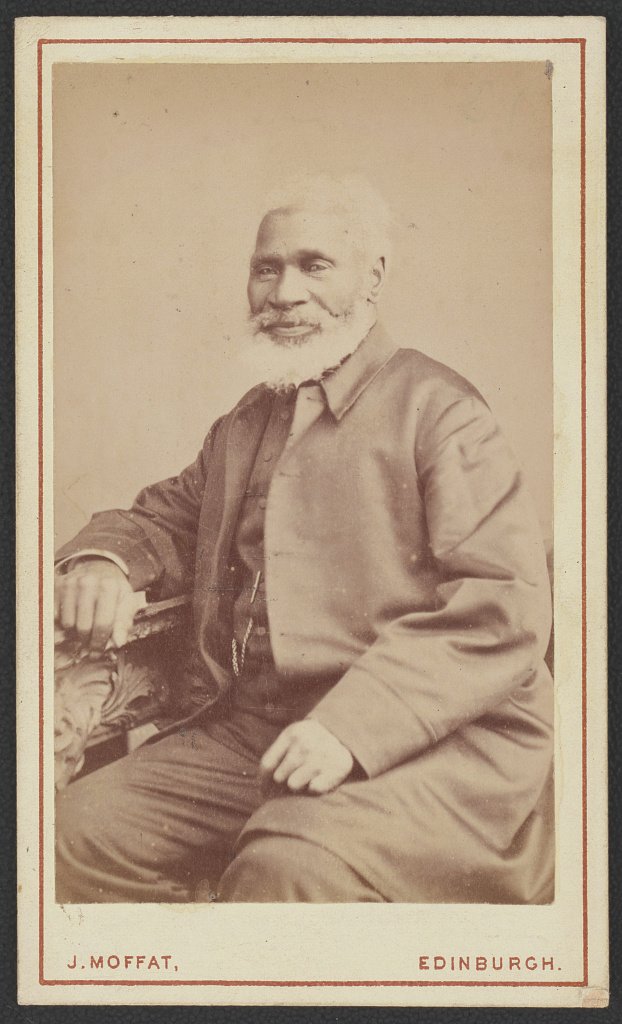
Reaching safety was not the end of the journey. Black communities built schools, churches, businesses, and networks of support. At the Dawn Settlement, Josiah Henson helped turn the promise of freedom into a future.
Read more about Black settlement
Upper Canada was part of a larger story of enslavement, resistance, abolition, and the search for safety. People escaping slavery in the United States came north through networks that later became known as the Underground Railroad.
Crossing the border could mean legal freedom under British rule. It did not mean an end to hardship. Newly arrived families still faced discrimination, poverty, uncertain work, and the urgent need for homes, schools, churches, and community.
Across what is now Ontario, Black communities created those foundations. They organized mutual aid, established churches and schools, published newspapers, built businesses, and defended their rights.
The Dawn Settlement near present-day Dresden is one important example. Founded in 1841 with Reverend Josiah Henson among its founders, it included the British American Institute, which offered practical and academic education to Black students and adults.
A story of agency: The Underground Railroad was not only a route to Canada. It depended on courage, planning, and networks of support—and continued in the communities people built after they arrived.
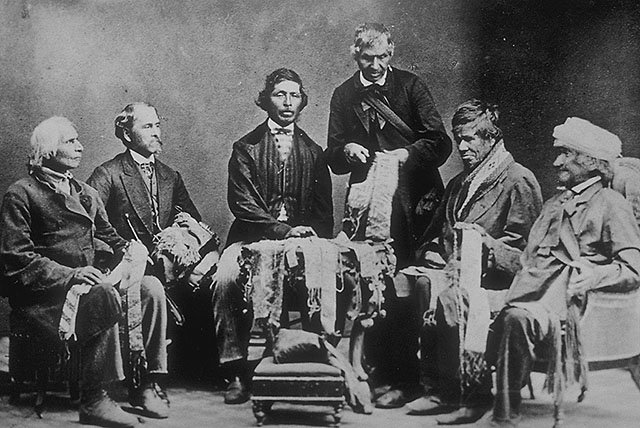
Relationships. Memory. Ways of seeing the world. Haudenosaunee communities have sustained their identities through enormous change, and continue to nurture their languages and knowledge today.
Read more about Haudenosaunee
The Haudenosaunee Confederacy brings together the Mohawk, Oneida, Onondaga, Cayuga, Seneca, and Tuscarora nations. Haudenosaunee peoples have deep connections to the Great Lakes and the Grand River region, as well as communities across the international border.
In the years surrounding the novel, Haudenosaunee communities navigated enormous political change while maintaining their own identities, responsibilities, and systems of governance.
Colonial policies repeatedly attempted to separate Indigenous peoples from their lands, families, cultures, and languages. Yet Haudenosaunee language and cultural revitalization continue through community-led schools, knowledge centres, artists, speakers, and families.
When the story touches Haudenosaunee language, it does so with the understanding that language is not decoration. It carries relationships, memory, and ways of seeing the world.
Learning with care: This site does not attempt to teach Haudenosaunee language or share cultural knowledge outside its proper context. Readers are encouraged to learn from Haudenosaunee-led organizations and educators.
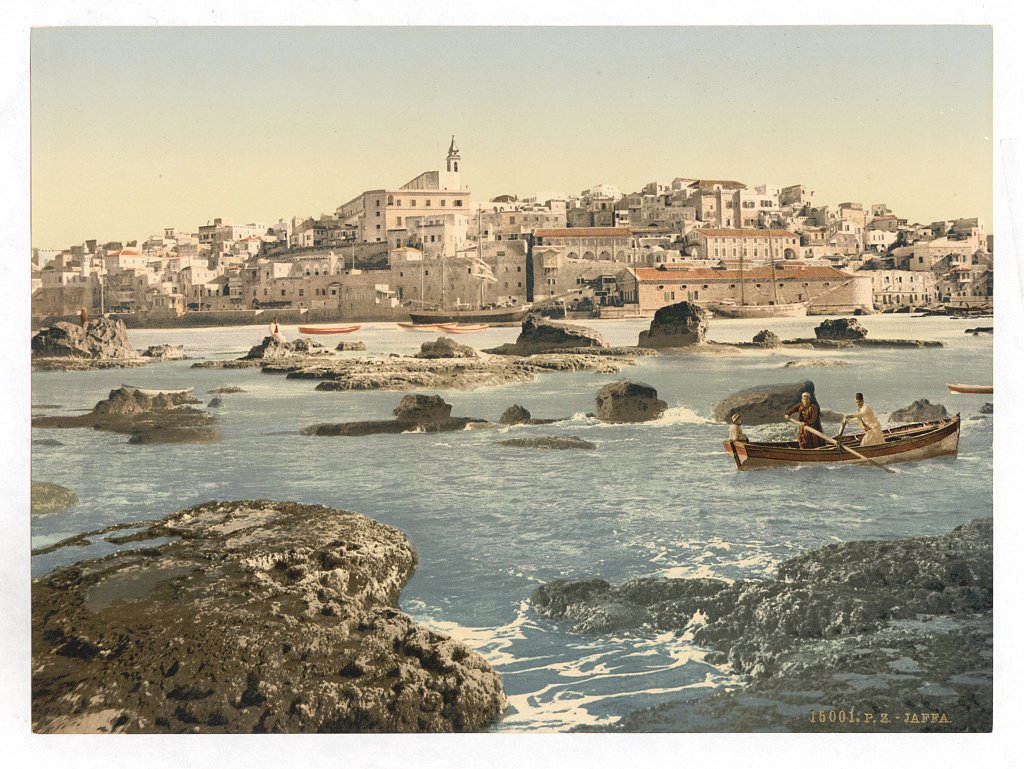
Before Waleed’s journey, there was another shore. In Ottoman Palestine, Jaffa connected families, merchants, travellers, and pilgrims with the wider Mediterranean world.
Read more about Ottoman Palestine's Jaffa
Waleed’s history begins in Ottoman Palestine, in a society shaped by family, faith, trade, farming, and the movement of people across the eastern Mediterranean. By the middle of the nineteenth century, Jaffa was a growing port city and an important gateway to Jerusalem.
Ships brought merchants, goods, travellers, and pilgrims to its shore. From the port, people continued inland to Jerusalem; from its surrounding countryside came produce, including the citrus cultivation that would help make Jaffa famous in the decades ahead.
Jaffa’s streets and markets brought together Muslim, Christian, and Jewish residents, as well as visitors from across the Ottoman Empire and beyond. For generations, religious communities maintained their own institutions while trade, neighbourhood life, travel, hospitality, and shared public spaces fostered enduring traditions of coexistence and mutual exchange.
Like every society, it also faced inequalities and periods of tension, particularly as imperial change and outside pressures reshaped the region.
Work & trade
Merchants, sailors, farmers, artisans, and labourers connected the port to its rural hinterland and to Mediterranean markets.
Pilgrimage & travel
Jaffa was a customary arrival point for people travelling to Jerusalem, making it a place of welcome, commerce, and exchange.
Change & possibility
Ottoman reforms and expanding international trade brought opportunity for some, while also reshaping older local relationships and inequalities.
A note on Waleed’s journey: Economic opportunity could draw families toward distant places, but migration is never explained by one reason alone. Family ties, education, trade, safety, and hope all shaped the choices people made.
The book invites young readers to consider not only whether an action is brave, but whom it serves, what it costs, and who lives with its consequences.
Six questions to keep the conversation going
01 Can someone who is frightening still earn our trust?
02 How do we distinguish courage from recklessness?
03 What does it mean to keep a promise—and who bears the cost when promises are broken?
04 When does helping someone become a responsibility rather than a favour?
05 Can a good action still be selfish? What would help you decide?
06 What might someone give up for another person besides their safety?
FROM HISTORY INTO POSSIBILITY
Real roots. An imagined world.
The historical setting is one part of the adventure. Beyond the Floral Gate, the rules change.